In short
- Book an 8:00 AM entry slot if driving yourself.
- Guided combo tours start at 6:00 AM to beat the clouds.
- The dry season (December through April) offers the best visibility.
In this article
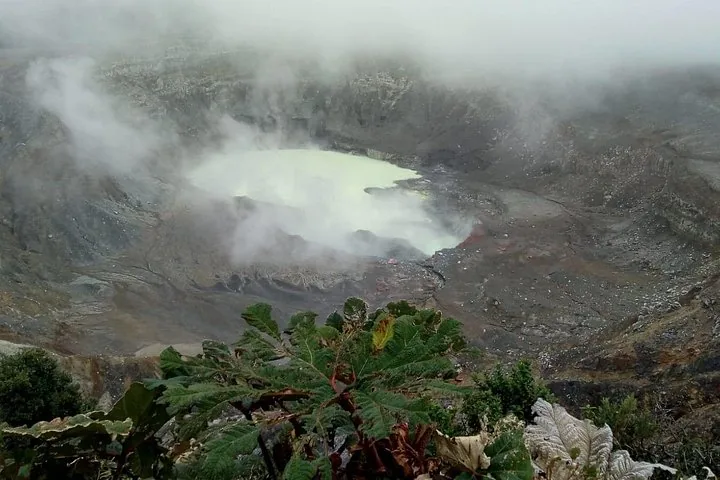
Poás Volcano sits at an elevation of 2,708 meters (8,885 feet). At this altitude, weather conditions change rapidly. If you arrive too late, you will likely stare into a wall of white fog instead of the acidic crater lake.
What is the best time to see Poas Volcano crater?
The best time to see the crater is between 8:00 AM and 10:00 AM.
Clouds typically obscure the massive 1.5-kilometer crater entirely by 10:30 AM. Clouds rarely lift again once they settle in. Arriving right when the park opens gives you the highest chance of a clear view.
What is the best season to visit the volcano?
The dry season, from December through April, is the best time to visit.
While tours operate year-round, these months provide the most cloudless days. Even in the dry season, you still need to visit early in the morning. Rain and mist are common in this high-altitude cloud forest regardless of the month.
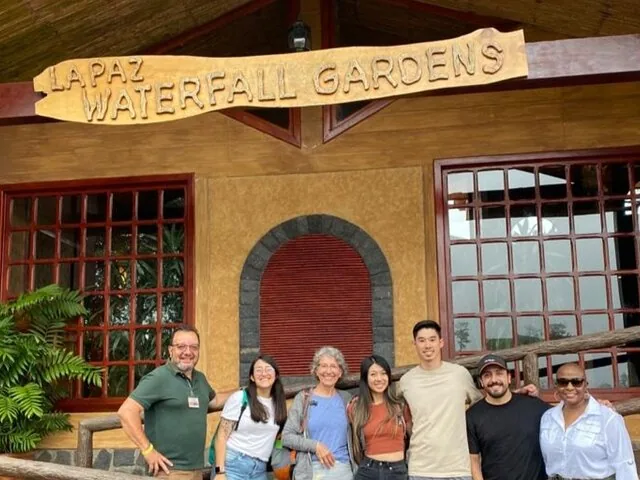
How do guided tours handle the morning clouds?
Combo tours schedule early departures from San José to reach the volcano before the fog rolls in.
A typical 10 to 12-hour full-day excursion starts with a hotel pickup around 6:00 AM. This ensures you arrive at the national park gates in time for the best visibility. The tour operators secure the mandatory advance tickets for these early time slots.
How do I secure an early time slot on my own?
You must book tickets online in advance through the SINAC website.
Poás Volcano National Park limits entry to 1,064 visitors per day. No walk-up sales are permitted at the gate. If you are self-driving, you need to purchase an 8:00 AM slot online well before your trip.

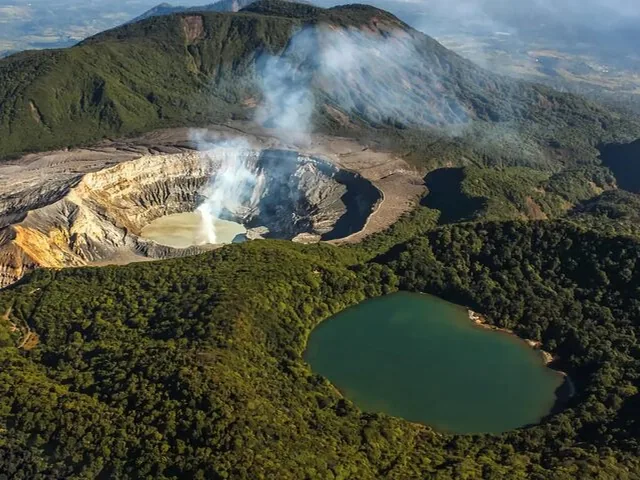
What happens if the crater is clouded over?
You may not be able to wait long for a clear view.
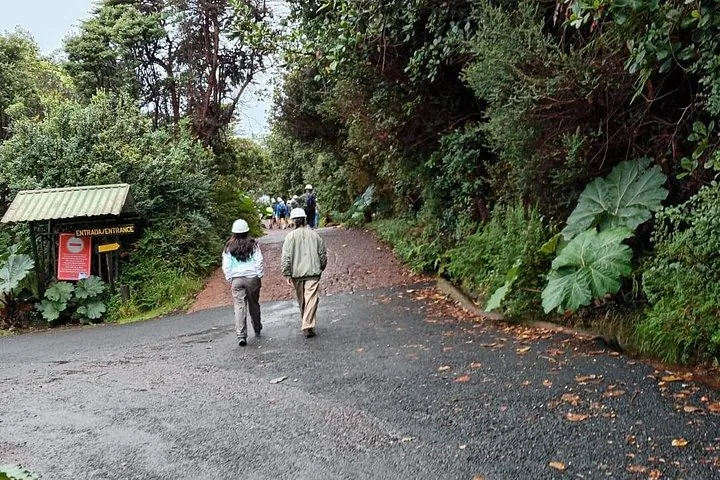
Park staff enforce a strict 20-minute limit at the main crater viewpoint to minimize your exposure to sulfur dioxide. You must wear the provided safety helmet during this time. If the view is completely obscured, you will still have to leave when your time is up.
What else should I plan for the early morning visit?
Dress warmly, as morning temperatures drop significantly at 8,885 feet.
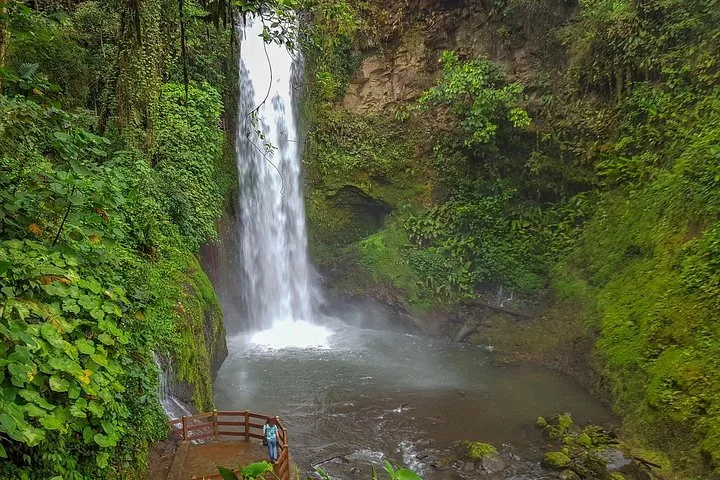
Bring a warm jacket or fleece, plus a rain poncho. A small daypack helps you shed layers as the day warms up during your later stops at Doka Estate and La Paz Waterfall Gardens.
| Item | Why you need it |
|---|---|
| Warm jacket | Temperatures drop significantly at the 2,708-meter elevation. |
| Rain poncho | Mist is common in the cloud forest early in the morning. |
| Original passport | Required for entry verification at the national park gate. |

Questions travellers ask
How long can you stay at the Poas Volcano crater?
Rangers can limit time at the viewpoint when volcanic gas levels rise, so plan for a short visit.
Do I need to buy Poas Volcano tickets in advance?
Yes. Mandatory advance online reservations are required via the SINAC website. Walk-up ticket sales are not permitted at the park.
Can you drive to Poas Volcano on your own without a tour?
Yes, you can self-drive a rental car to the volcano. The roads are fully paved, and the drive takes 1 to 1.5 hours from San José. You must secure your own early-morning park tickets online.